If you are starting a business, applying for a professional license, becoming a vehicle dealer, or fulfilling a contractual requirement, you may be asked to obtain a surety bond. But what exactly is a surety bond, how does it work, and how do you get one in Texas?
A surety bond in Texas is a financial guarantee designed to help protect the party requiring the bond if the bonded party fails to meet certain obligations covered by the bond. Depending on the situation, a bond may be required by a government agency, licensing authority, contract, or another organization.
Understanding the different types of bonds, their costs, and the application process can help you choose the right bond for your situation.
At Bonds Experts, we help individuals, dealers, and business owners understand their bonding requirements and navigate the process of obtaining the appropriate surety bond.
In this guide, you will learn what a surety bond is, how it works, which types are available, what affects the cost, and how to get started.
What Is a Surety Bond?
A surety bond is an agreement involving three parties that provides financial protection for certain obligations.
The three parties are:
- Principal: The individual or business required to obtain the bond.
- Obligee: The organization, government authority, customer, or other party requiring the bond.
- Surety: The company that guarantees the principal’s covered obligations under the terms of the bond.
For example, a business may need a license and permit bond before it can obtain a particular license. The business is the principal, the licensing authority is the obligee, and the surety provides the guarantee specified in the bond.
If the principal fails to meet a covered obligation and a valid claim is established, the surety may have to respond according to the bond’s terms. Depending on the agreement and applicable law, the principal may be responsible for reimbursing the surety for amounts paid on its behalf.
A surety bond is not the same as ordinary business insurance. Its purpose, coverage, and obligations depend on the specific bond form and the requirement it satisfies.
How Do Surety Bonds Work in Texas?
The purpose of a Texas surety bond depends on the type of bond and the obligation it guarantees.
In general, the process works as follows.
1. A Bond Is Required
A business, professional, dealer, or individual discovers that a bond is needed to obtain a license, complete a transaction, meet a contract requirement, or satisfy another obligation.
The requirement should identify the type of bond and, where applicable, the required bond amount.
2. The Applicant Identifies the Correct Bond
The applicant confirms the exact bond required, including the amount, wording, obligee, and any filing instructions.
This is important because different bonds serve different purposes. Choosing a similar-sounding bond may not satisfy the original requirement.
3. The Applicant Applies for the Bond
The applicant provides the information needed by the bonding provider. Depending on the bond, this may include personal details, business information, license details, financial information, or supporting documents.
The surety or provider reviews the application according to the applicable underwriting requirements.
4. The Bond Is Issued
If the application is approved, the bond is issued with the required details.
The applicant should review the document carefully to confirm that the names, bond amount, bond type, and obligee information are correct.
5. The Bond Is Submitted or Filed
The bond is delivered to the appropriate authority or organization according to its instructions.
Obtaining a bond does not automatically complete a license application or guarantee approval. Other forms, fees, inspections, or requirements may still apply.
What Are the Different Types of Surety Bonds in Texas?
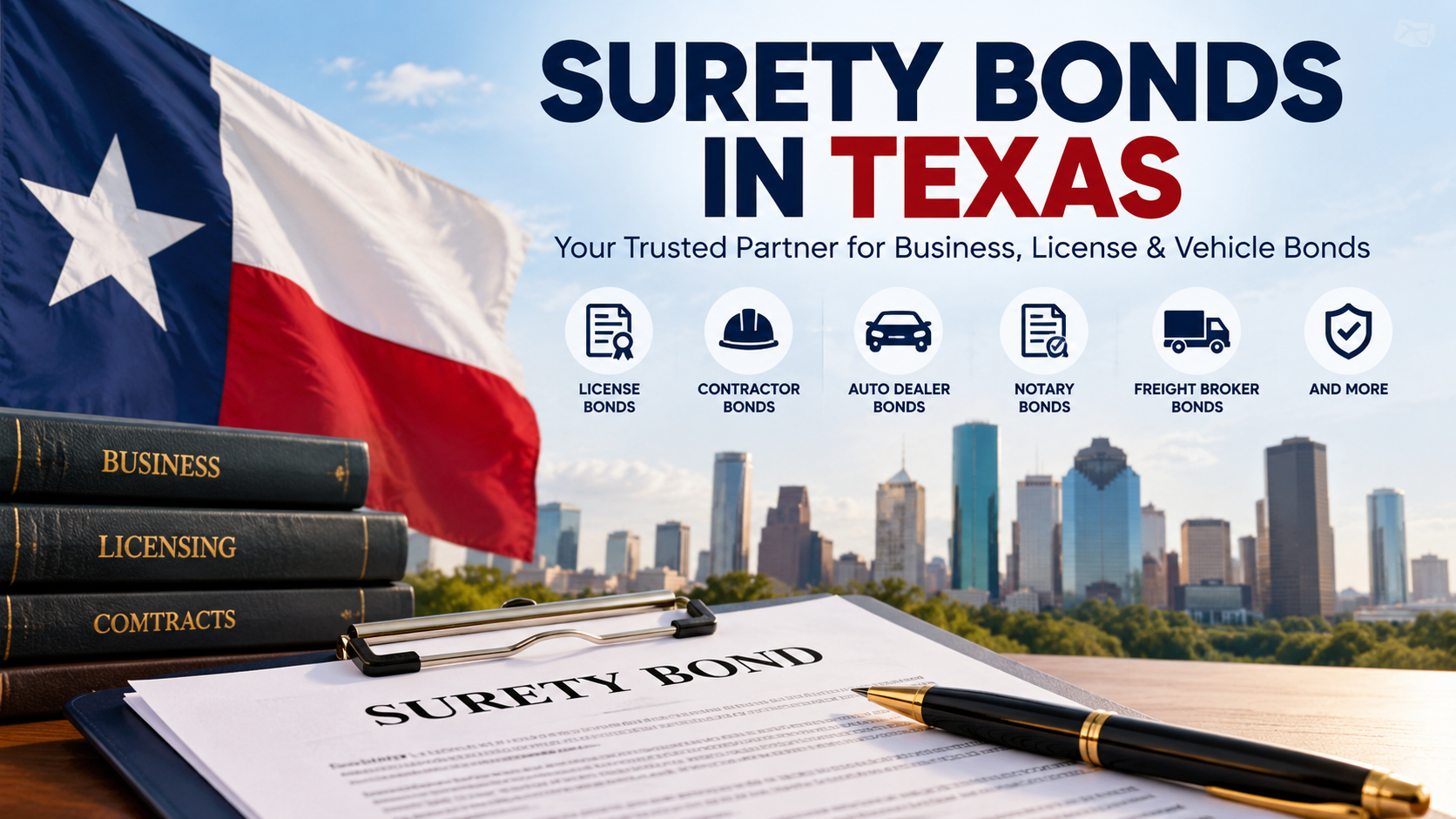
There are several categories of surety bonds in Texas, and the right one depends on what you need to accomplish.
1. License and Permit Bonds
A license or permit bond may be required before a person or business can obtain a particular license or operate under a regulated activity.
The purpose is to provide a financial guarantee of specified obligations imposed by the applicable law, regulation, or licensing requirement.
Examples may include certain contractor license bonds, auto-related business bonds, and other occupational or commercial bonds.
Before applying, confirm the bond requirements with the licensing authority responsible for your particular activity.
2. Auto Dealer Bonds
Certain motor vehicle dealers in Texas must meet bonding requirements as part of the applicable licensing process.
An auto dealer bond helps provide financial protection for qualifying claims covered by the bond. The exact requirements depend on the type of dealer license and the applicable rules.
If you are opening or operating a dealership, verify the required bond amount, license category, and filing instructions before purchasing a bond.
3. Contractor Bonds
Some contractors must obtain a bond to meet licensing, permit, or contractual requirements.
A contractor license bond and a construction contract bond are not necessarily the same. A license bond may guarantee compliance with specified legal or licensing obligations, while contract bonds may relate to the performance of a particular construction agreement.
The bond required depends on the project, contract, jurisdiction, and applicable regulations.
4. Notary Bonds
A notary bond may be required as part of the commissioning process for a notary public.
The bond provides protection for covered obligations under the applicable requirements. It does not replace the notary’s responsibility to follow the law and perform notarial duties properly.
Applicants should confirm the current requirements for their commission before applying.
5. Freight Broker Bonds
Freight brokers subject to federal requirements may need a freight broker surety bond, commonly known as a BMC-84 bond, or an eligible alternative permitted by federal rules.
The requirement is associated with federal freight broker authority, not simply a general Texas business license.
Applicants should confirm current federal requirements and the appropriate filing procedure before arranging their bond.
6. Auto Wrecker Bonds
Depending on the activity and jurisdiction, an auto wrecker or towing-related business may need a bond to satisfy applicable licensing or permit requirements.
The exact bond depends on the business activity and the authority requiring it. Confirm the required bond type and amount before applying.
7. Metal Recycler and Secondhand Dealer Bonds
Certain metal recycling, scrap metal, or secondhand dealer activities may involve specific licensing and bonding requirements.
These requirements can differ depending on the business activity and applicable state or local rules. Confirm which bond applies to your operation rather than assuming every recycling business needs the same bond.
8. Bid, Payment, and Performance Bonds
These bonds are commonly associated with construction and contractual obligations.
- Bid bonds provide a guarantee related to a bidder’s obligations under the applicable bidding process.
- Payment bonds help protect eligible subcontractors and suppliers for covered payment obligations.
- Performance bonds provide a guarantee related to the contractor’s performance of the covered contract.
The specific protections, claim procedures, and obligations depend on the bond wording and the applicable contract or law.
Important: This list covers common bond categories, not every possible requirement. The correct bond depends on your circumstances and the authority or organization requiring it.
How Much Does a Surety Bond Cost in Texas?
The cost of a surety bond in Texas depends on the bond type, required bond amount, underwriting criteria, and other factors.
It is important to understand the difference between the bond amount and the premium.
The bond amount is the financial amount specified in the bond. It represents the limit or obligation described in the applicable bond terms, rather than the price you automatically pay to obtain the bond.
The bond premium is the amount charged to issue the bond. The premium varies by bond type and may depend on factors such as the applicant’s financial profile, credit history where relevant, business experience, and the surety’s underwriting criteria.
Some bonds have relatively straightforward pricing, while others require a more detailed underwriting review.
Before proceeding, ask your bond provider to confirm:
- The required bond amount.
- The premium you must pay.
- Any additional application or processing fees.
- Whether collateral or further documentation is required.
- How the bond will be issued and filed.
Do not assume that all surety bonds have the same pricing structure. Request a quote based on your specific requirements.
How Do You Get a Surety Bond in Texas?
If you need a Texas surety bond, follow these steps to help make the process more straightforward.
Step 1: Identify Why You Need the Bond
Determine whether the bond is required for a license, permit, vehicle-related business, construction contract, or another obligation.
If you are unsure which bond applies, contact the authority or organization that requested it.
Step 2: Confirm the Bond Requirements
Ask for the exact bond type, required amount, obligee name, bond form, and filing instructions.
Getting these details right can help prevent delays caused by submitting the wrong bond.
Step 3: Gather Your Information
Depending on the bond, you may need to provide identification, business details, license information, financial information, or other supporting documents.
Your provider can explain what is needed for your specific application.
Step 4: Request a Quote
Contact a surety bond provider to discuss your requirements and obtain a quote.
Make sure you understand the premium, any additional fees, and the information required before the bond can be issued.
Step 5: Complete the Application
Provide accurate information and respond to any requests for additional documents.
The underwriting process and approval criteria vary depending on the bond.
Step 6: Review the Bond Document
Before submitting the bond, verify that the principal, obligee, bond amount, and other required information are correct.
Step 7: Submit the Bond
Follow the filing instructions provided by the relevant authority or organization. Check whether any additional forms, fees, or licensing steps are required.
How Long Does It Take to Get a Surety Bond?
The time required to obtain a surety bond in Texas depends on the bond type, the completeness of your application, underwriting requirements, and any additional verification needed.
Some bonds may be issued relatively quickly when the requirements are straightforward and all information is available. Other bonds may require more detailed underwriting or additional documentation.
You can help avoid unnecessary delays by identifying the correct bond before applying, providing accurate information, and responding promptly to requests from the provider.
If you have a deadline, tell your bond provider when the bond must be issued and filed. Also confirm the processing requirements with the organization requesting the bond.
What Is the Difference Between a Surety Bond and Insurance?
Although both may involve financial protection, a surety bond and an insurance policy serve different purposes.
| Surety bond | Insurance |
|---|---|
| Guarantees specified obligations of the principal under the bond terms | Provides coverage for specified risks under an insurance policy |
| Involves a principal, obligee, and surety | Generally involves an insurer and policyholder, with other parties potentially covered |
| A surety may seek reimbursement from the principal for covered amounts paid, depending on the agreement and applicable law | Claims are generally handled according to the policy terms and applicable law |
| Often required to meet licensing, permit, or contract requirements | Often purchased to manage covered business, property, liability, or other risks |
Neither product provides unlimited protection. The specific bond or insurance policy wording determines what is covered, which exclusions apply, and what obligations each party has.
Why Choose Bonds Experts for Your Texas Surety Bond?
Finding the correct bond can be confusing when requirements differ across industries, licenses, and business activities.
Bonds Experts helps individuals, dealers, and business owners understand their bonding options and navigate the process of obtaining the appropriate surety bond.
Based in Meadows Place, Texas, Bonds Experts serves customers across Texas. Our team can help you identify the information needed to explore your options, understand the bonding process, and work toward obtaining the bond required for your situation.
Whether you need a contractor bond, auto dealer bond, notary bond, freight broker bond, auto wrecker bond, metal recycler bond, or another type of surety bond, start by confirming the exact requirement.
Our goal is to make the process clearer, help you understand the next steps, and provide straightforward guidance on your bonding needs.
Get Help With Your Texas Surety Bond
Not sure which bond you need? Contact Bonds Experts to discuss your requirements and explore your options.
- Phone: (713) 930-6161
- Email: info@bondsexperts.com
- Office: 11611 W Airport Blvd, Ste G, Meadows Place, TX 77477
- Website: https://bondsexperts.com/contact/
You can also explore our Texas Surety Bonds services to learn more about the bond types we handle.
Frequently Asked Questions About Surety Bonds in Texas
What is a surety bond in Texas?
A surety bond is a financial guarantee involving a principal, an obligee, and a surety. It helps protect against certain failures to meet the obligations specified in the bond. The exact requirements and protections depend on the bond type and applicable rules.
Are surety bonds required in Texas?
Some surety bonds are required by state or federal law, licensing authorities, local regulations, or contracts. Others may be required as part of a specific transaction. Whether you need a bond depends on your activity and the requirement you must satisfy.
How much does a surety bond cost in Texas?
The price depends on the bond type, required bond amount, underwriting criteria, and other factors. The bond amount is different from the premium you pay to obtain the bond. Contact a provider for a quote based on your requirements.
Can I get a surety bond for my small business?
Many small businesses can apply for surety bonds, but approval and pricing depend on the type of bond and the provider’s requirements. Some bonds involve straightforward applications, while others require additional financial or business information.
How do I know which surety bond I need?
Start by checking the instructions from the licensing authority, agency, customer, or organization requesting the bond. Confirm the exact bond name, amount, obligee, and filing instructions before applying.
Is a surety bond the same as a bonded title?
No. A bonded title is a vehicle title process that may require a particular type of surety bond. Other surety bonds serve different purposes, such as meeting licensing, permit, or contract requirements.
Where can I get a surety bond in Texas?
You can contact Bonds Experts to discuss your bonding requirements and available options. The appropriate bond and approval process depend on your circumstances and the requirements of the authority or organization requesting it.
Final Thoughts
A surety bond can be an important requirement for obtaining a license, operating a regulated business, completing a contract, or meeting another financial obligation.
Understanding how surety bonds in Texas work, which type you need, and what affects the cost can help you take the right next step. Always verify the exact bond requirements before applying, and review the bond document carefully before submitting it.
If you need help exploring your options, Bonds Experts can help you understand the bonding process and determine what information is needed to get started.
Contact us at (713) 930-6161 or visit https://bondsexperts.com/contact/.
Disclaimer: Bonds Experts is a private, independent service provider. We are not a government agency and are not affiliated with, endorsed by, or acting on behalf of the Texas DMV, TxDMV, or any county office. This article is for general informational purposes only and does not constitute legal, financial, or insurance advice. Bond requirements, eligibility, underwriting, and costs vary. Verify applicable requirements with the relevant authority or organization before proceeding.